
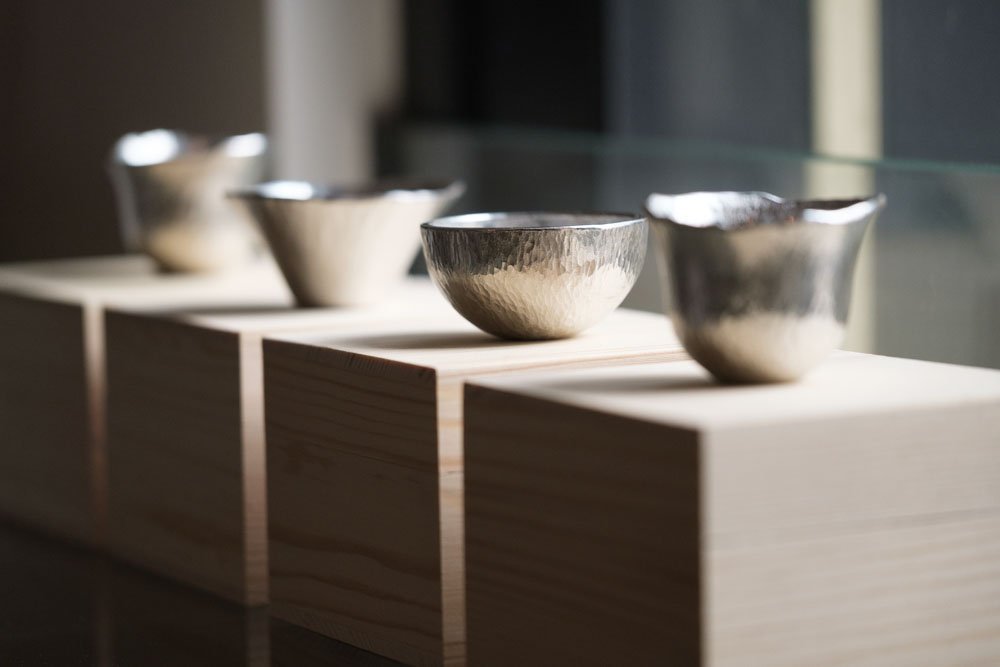
純錫 Pure Tin
“會呼吸的金屬”
「金、銀、銅、鐵、錫」在不同的文化當中有上千年的器物製造歷史,各自發展出不同的工藝風格。文獻記載錫藝歷史可追溯至公元前3,700年,史前的人類就已經把錫材混入其他金屬如銅、鉛鑄製作燭台、錫盤等祭祀禮器。
純錫是罕有不含毒性的金屬,其柔軟度高,有很強的延伸性,導熱性能好,容易加工,成本也比銀等金屬相宜,因此錫器日用品和器皿也漸趨普及,製成品可擁有銀器般的閃炩外觀,而且錫本身帶微黃色調,產品也較銀製品少一分冰冷、多一絲溫潤暖意。\
“A Breathing Metal”
Metals such as gold, silver, copper, iron, and tin have been used in craftsmanship for thousands of years across different cultures, each developing its own unique techniques and styles. Historical records trace tin craftsmanship back to around 3700 BCE, when prehistoric civilizations began mixing tin with other metals such as copper and lead to cast ritual objects like candlesticks and plates.
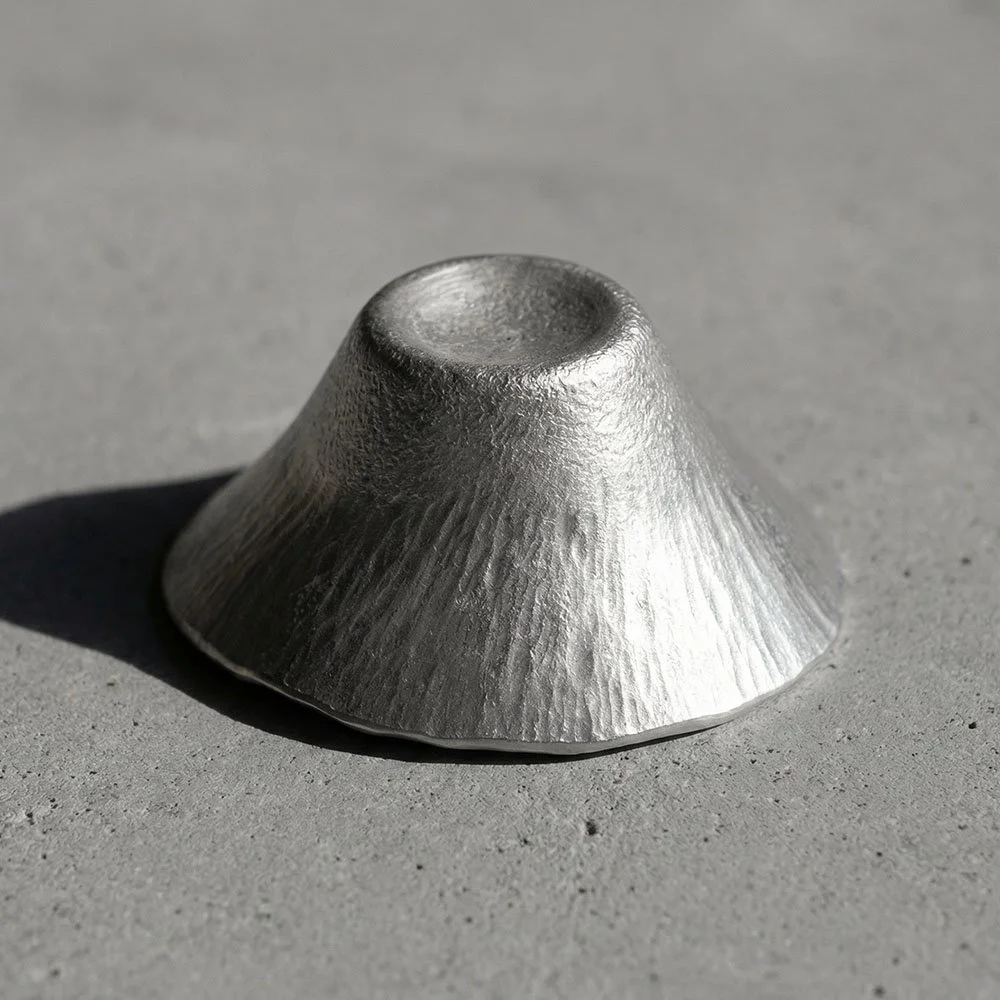
錫藝的文化
在亞洲地區,部分錫器發展已具一定規模。例如知名的大馬錫藝品牌,其原產地馬來西亞盛產錫礦聞名,並擁有世上最大的錫製品工廠,廠家用上含97%品質優良的純錫,配上精美雕刻、條紋,製成兼備觀賞價值的日用品或飾物,錫器更是其中一種深受歡迎的馬來西亞手信。
重視技藝的日本同樣不斷鑽研鑄術與創新,將傳統融入時代,讓這種古老金屬的製作添加現代元素,造出令人眼前一亮的工藝品。台灣方面,錫工家族出身的工匠陳萬能是當地碩果僅存的錫藝師,家族下一代亦投入承傳錫藝研發,更顯這種古老事業的轉型漸見曙光。
錫既可鍛造也可鑄造,即使一般人毫無金屬知識與鑄造經驗,經專業指導下都可以輕鬆參與錫器製作,體驗錫的有趣變化。
The Culture of Tin Craft
In Asia, tin craftsmanship has developed into a well-established tradition in certain regions. For instance, Malaysia—renowned for its abundant tin resources—is home to some of the world’s largest tin manufacturers. Using high-quality tin with up to 97% purity, artisans create finely engraved and textured pieces, producing both decorative and functional objects. Tinware has also become a popular Malaysian souvenir.
In Japan, a culture that places great emphasis on craftsmanship continues to refine casting techniques while integrating tradition with modern innovation. This fusion brings new life to an ancient material, resulting in contemporary pieces that remain rooted in heritage. In Taiwan, master craftsman Chen Wan-Neng—one of the few remaining tin artisans—represents a lineage dedicated to preserving and advancing this craft, with the next generation continuing its development.
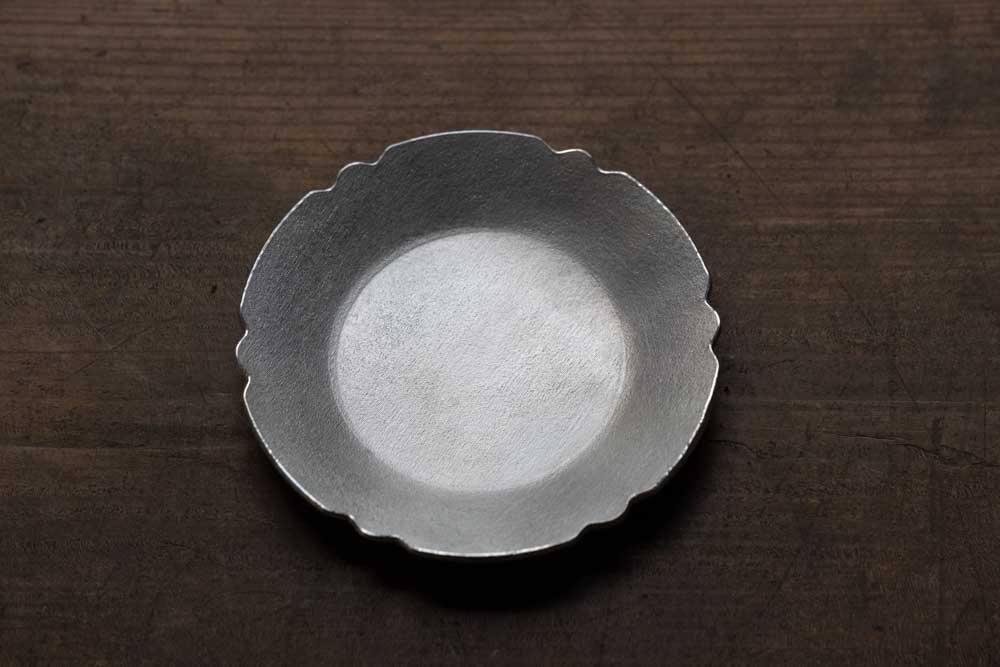
Tin can be both forged and cast. Even without prior knowledge of metalworking, beginners can easily participate in tin crafting under professional guidance and experience its unique transformation process. Pure tin is a rare non-toxic metal with high malleability, excellent ductility, and strong thermal conductivity. It is easy to work with and more affordable than metals such as silver, contributing to the growing popularity of tinware in daily use. Finished pieces can achieve a shine similar to silver, yet with a subtle warm tone—less cold than silver, and with a softer, more inviting character.
錫器的製作方法
Tin Crafting Method
金屬鍛敲
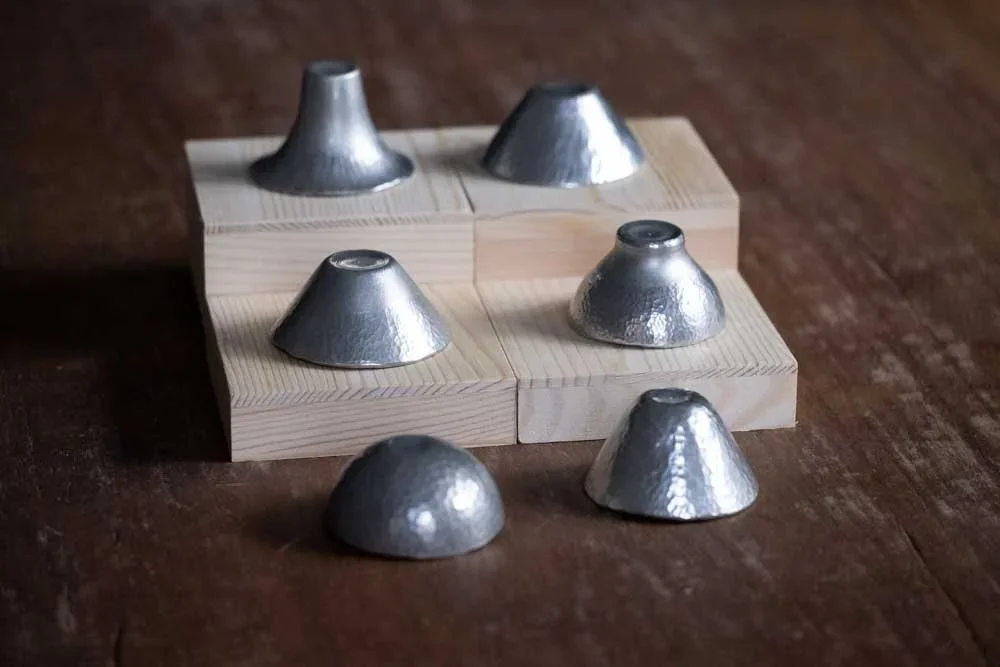
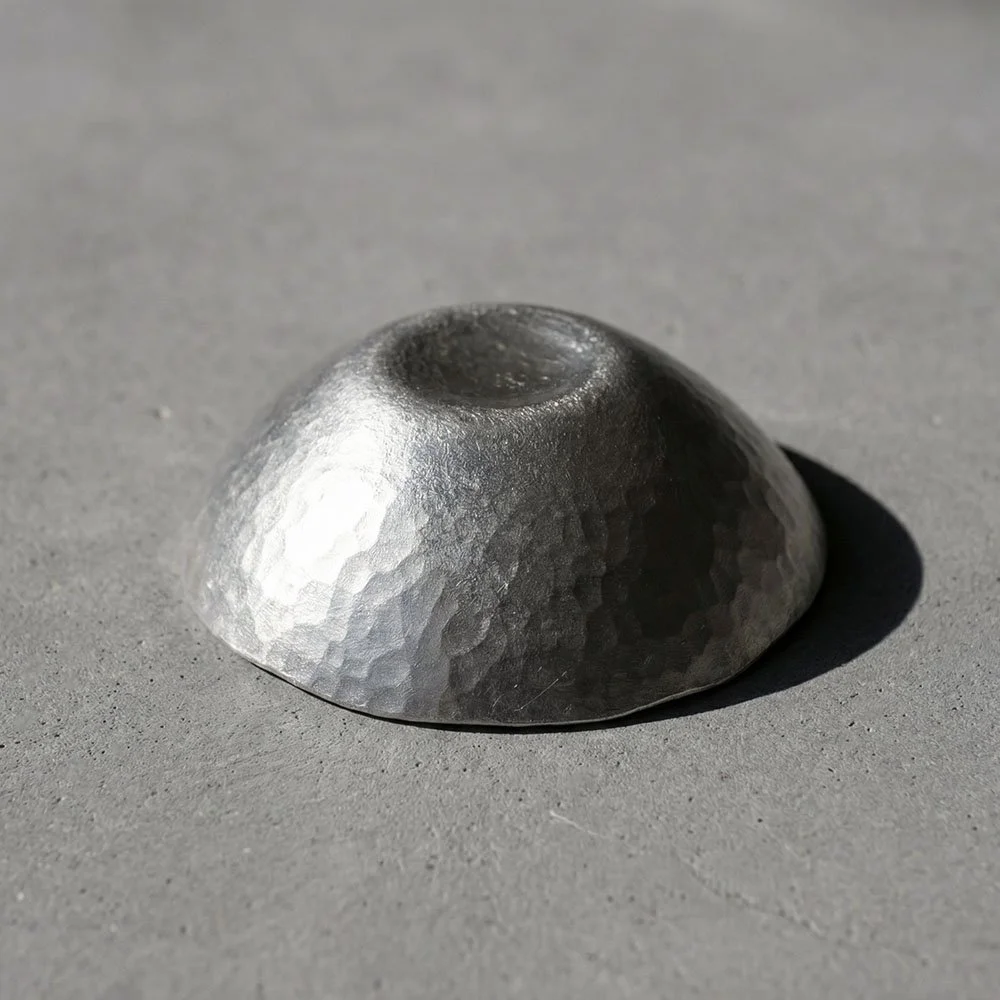
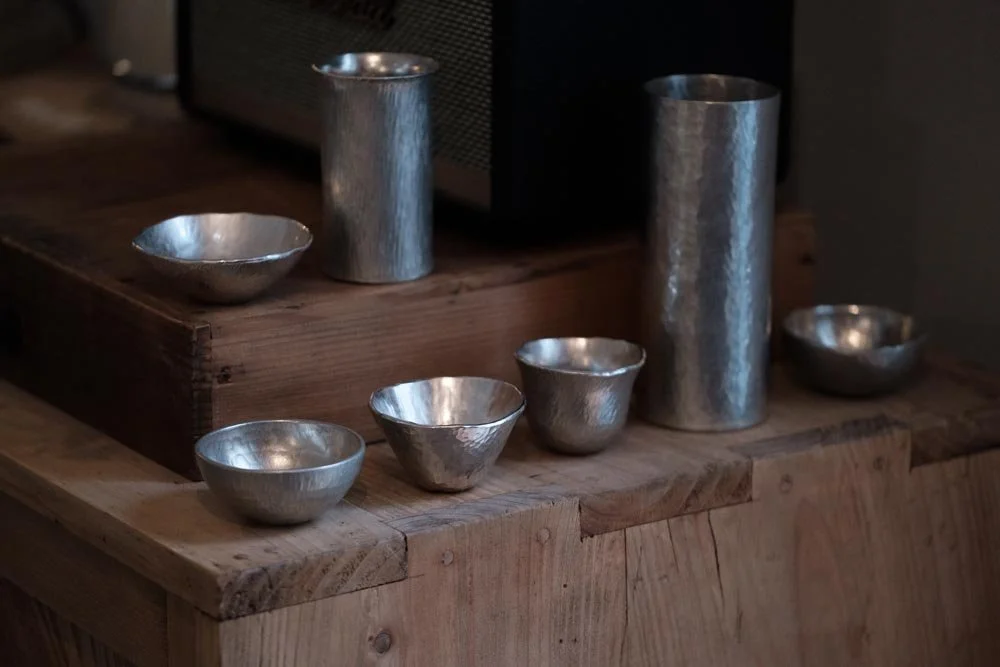
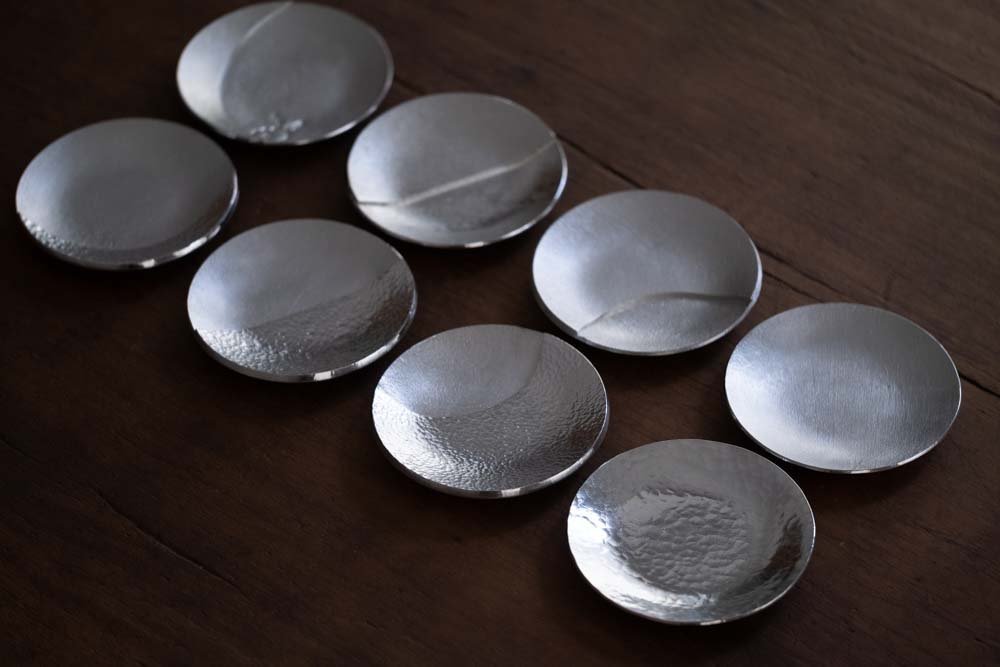
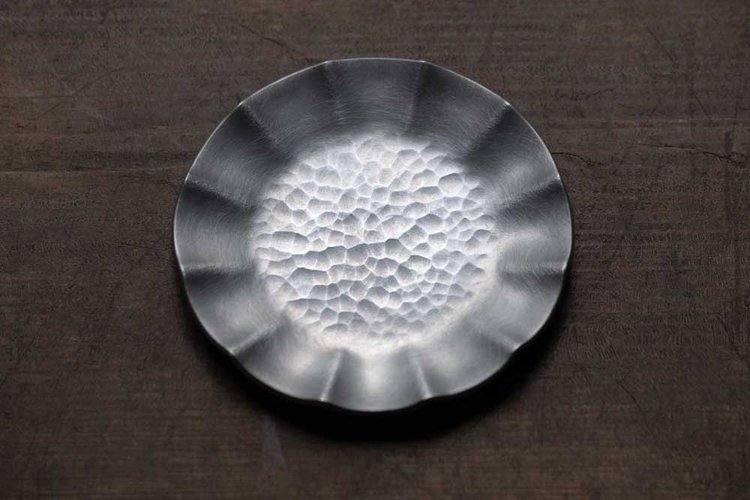
利用金屬可以延展與壓縮的特性,將100%純錫片反覆敲打成所需形狀,過程使用不同鎚子將金屬片由平面漸漸變成立體容器,根據所使用的金屬延展性決定過程需要退火與否,最後經過平整及敲上鎚紋成為最終的製成品。
Metal Forging
By utilising the malleability and compressibility of metal, a sheet of 100% pure tin is repeatedly hammered into the desired shape. During the process, different types of hammers are used to gradually transform the flat sheet into a three-dimensional form. Depending on the ductility of the material, annealing may be required throughout the process. The piece is then refined, flattened, and finished with hammered textures to complete the final product.
最佳使用狀況
Best Use of Tinware
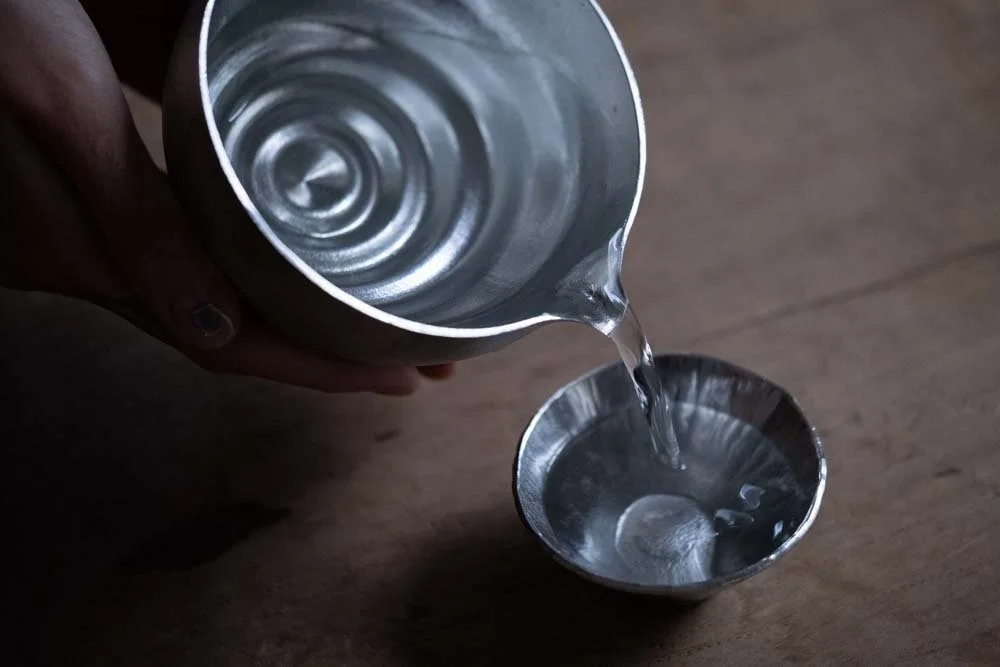
古人認為錫可以殺菌、去除雜質、淨化清水。傳說把錫片放入井口裡,可使井水更清甜。時至今日,這些說法雖然暫未經證實,但錫的導熱特徵,卻成為上佳的器皿材質,有利食物或飲品快速升溫或降溫,加上其金屬的保溫效果理想,不少人鍾情以錫杯作為共聚乾杯之選。
當錫與酒精相遇會產生化學作用,使酒的嗆辣被馴服,舉杯入口更柔軟順滑,一邊欣賞錫杯亮澤優雅的外觀,另一邊廂杯中之物在味蕾上慢慢滲出甘甜,酒精的香醇後勁緩緩湧現,延長餘韻,把美酒的特徵放大品嚐,為暢飲者帶來非一般的酒酌體驗。如果用錫杯品嚐咖啡,可以將咖啡置於錫杯內先靜止數分鐘,讓錫改變咖啡的結構,變更味蕾觸覺,你或者可以嚐到非一般的咖啡淳香,感覺比平常飲咖啡時更靜謐、和諧。
錫本身是一種穩定的金屬不易氧化,因此坊間也流行錫製茶壺和茶業貯藏器皿。錫可造成美麗高貴的外觀設計,成本價格卻比其他貴金屬親民,因此是理想的另類選擇,只要好好保養,錫製成品也可以十分耐用。
In ancient times, tin was believed to have properties that could purify water, remove impurities, and even inhibit bacteria. There are legends suggesting that placing tin sheets in wells could make the water taste sweeter. While these claims are not scientifically proven today, tin’s excellent thermal conductivity makes it an ideal material for vessels—allowing food and beverages to heat up or cool down quickly. Combined with its ability to retain temperature, tin cups have become a popular choice for gatherings and toasts.
When tin comes into contact with alcohol, it is said to subtly influence the drinking experience—softening the sharpness and allowing the texture to feel smoother on the palate. As you hold a tin cup, its elegant sheen enhances the visual experience, while the drink gradually releases its sweetness and depth of flavour. The aroma and aftertaste unfold more gently, extending the finish and enriching the overall tasting experience.
When used for coffee, allowing the beverage to rest briefly in a tin cup may alter its structure slightly, creating a smoother and more balanced flavour profile. This can offer a calmer, more harmonious tasting experience compared to drinking coffee as usual.
Tin itself is a stable metal and does not oxidise easily. As a result, tin teapots and tea storage containers are also commonly used. With its refined appearance and relatively accessible price compared to other precious metals, tin serves as an ideal alternative material. With proper care, tinware can remain durable and long-lasting.
錫器保養
Tinware Care Instructions
純錫錫器較為柔軟,切勿使用硬物刷磨或用力壓捏,以防變形
錫器較不耐酸鹼,因此不宜用於汽水、檸檬汁、醋飲等酸性飲品中
錫器傳熱率高但熔點較底,所以應避免將錫器置於 -5℃以下,或160℃以上高溫處
請勿放置於冷凍庫,並避免與直火接觸
純錫製品長期未使用暴露於空氣中,產生輕微氧化屬正常現象,若出現霧面或
變黑可用梳打粉開水至牙膏狀輕刷表面
Pure tin is relatively soft. Avoid scrubbing with hard objects or applying excessive pressure to prevent deformation
Tin is less resistant to acidic and alkaline substances. It is not recommended for use with beverages such as soda, lemon juice, or vinegar-based drinks
Tin has high thermal conductivity but a relatively low melting point. Avoid exposure to temperatures below -5°C or above 160°C
Do not place in the freezer and avoid direct contact with open flames
If pure tin products are left unused and exposed to air for extended periods, slight oxidation may occur, which is normal. If the surface becomes dull or darkened, use a paste made from baking soda and water (toothpaste-like consistency) to gently clean the surface

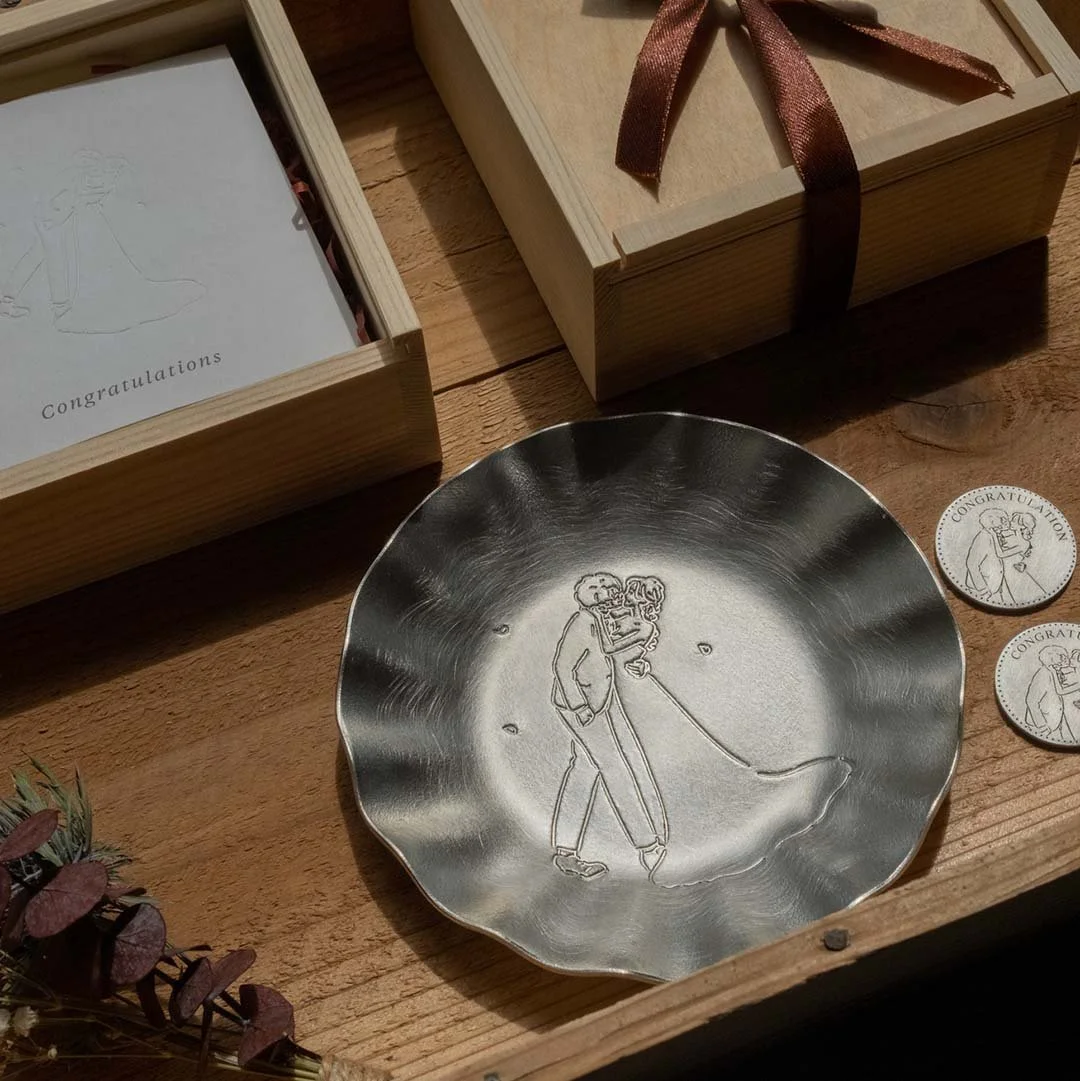

Better Half Other Half Box-Set
You can choose the zodiac signs on front and back sides of coins Wooden package includes brass piece with free engraving
choice 1 ) Other Half/Better Half Necklace 1pc, Zodiac Coins 2pcs➟ $798/boxset
choice 2 ) Other Half/Better Half Necklace 1pc, Zodiac Coins 2pcs, extra paperclip chain 1pc➟ $1,098/boxset
【Pre-order】14 working days for hand-made procedures
Other Half Necklace / Better Half Necklace
【Material】925 Silver
【Size】Pendant ~1.5cm, Chain length ~16” (41cm)
Zodiac Coins
【Material】100% Pure tin (lead-free)
【Size】3cm Diameter